
Pershing VINELink Is Now S.A.V.E.
Nevada ended VINE/VINELink search and notification on August 29, 2025. Nevada S.A.V.E. is the replacement. The familiar VINELink wording remains useful for people seeking the service, but every current Nevada search and primary alert button must go to S.A.V.E.
The Nevada Attorney General describes statewide cooperation among sheriffs, police chiefs, NDOC, the Department of Public Safety, and the Parole Board under NRS 228.205. That statewide design does not prove that every Pershing County source is online at every moment. Read any offline-jail warning, note the source agency shown with a result, and use direct confirmation if the feed appears unavailable.
The official transition announcement below documents the retirement of VINE and launch of S.A.V.E.
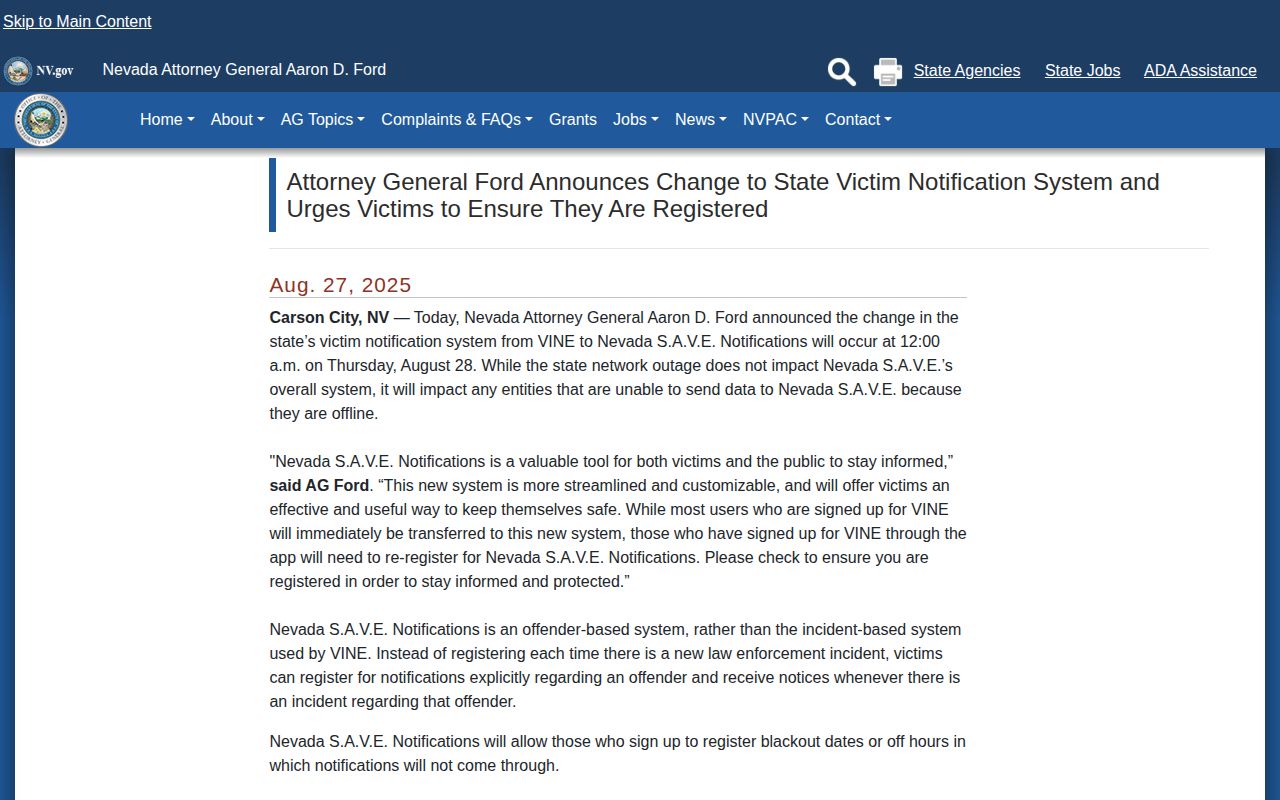
Use that dated notice to recognize retired instructions and avoid sending a Nevada user back to VINELink.
Search a Pershing Inmate on S.A.V.E.
S.A.V.E. accepts a full name, partial name, or identifier. Its search guidance suggests the first three letters of the first name and first three of the last name, separated by a space. CAPTCHA completion is required. Search results can include people in custody or under supervision, so read status and source agency together.
- Open Nevada S.A.V.E. and enter a full name, the suggested partial-name form, or an ID.
- Complete the CAPTCHA and review every plausible match.
- Compare identifiers. Never rely on a name alone when several people match.
- Read the custody or supervision status and identify the source agency.
- Request a notification if the matching record offers that option.
- Confirm a reported release through the Pershing Sheriff, NDOC release data, or the relevant court record.
A county-jail result and an NDOC result describe different systems. Leaving Pershing County Jail can mean community release or transfer. Leaving Lovelock Correctional Center can mean discharge, parole, residential confinement, or another movement. S.A.V.E. helps track the person, but the originating agency supplies the record behind the change.
The current official interface is shown in the source image below.
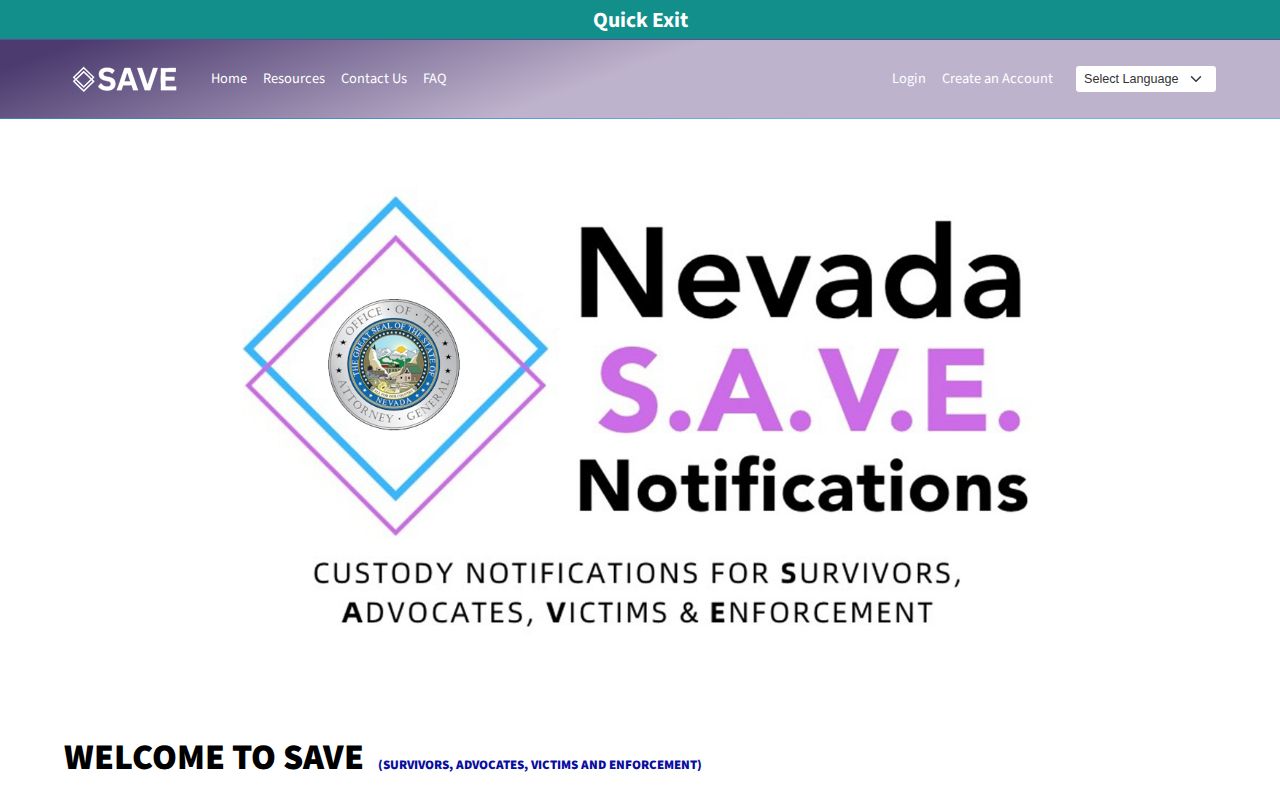
The screen demonstrates the current search and notification route rather than a historical VINELink workflow.
Pershing S.A.V.E. Release Fields
S.A.V.E. is offender-based. A notification request follows the person and can update if the person later returns to custody. That differs from old VINE registrations tied to a single incident. The result still requires context because supervision can continue after physical release.
| Field or signal | How to read it |
|---|---|
| Name and identifiers | Tools for distinguishing matches, not proof by name alone |
| Source agency | The sheriff, corrections, or supervision source supplying the update |
| Custody status | A current reported state that may be periodically updated |
| Supervision status | May show authority continuing after physical release |
| Notification option | Lets a user associate an alert with the matched person |
People no longer in custody may not appear. Thus, “no result” does not mean released. It may reflect discharge, a spelling mismatch, incomplete coverage, an offline source, or another system. A live result also is not a certified record. S.A.V.E. says information is periodically updated and unaudited.
Request Pershing County Release Alerts
The current interface may offer account and guest choices. For account creation, email is required while first and last name are optional. Offered delivery methods can include email, SMS, voice telephone, and TTY. Users choose preferences and a security question, then associate the correct offender with the notification request.
- Search and verify the matching person before starting registration.
- Select the notification option offered on that record.
- Choose guest access or an account when available.
- For an account, provide the required email and create the displayed password and security response.
- Select available delivery and after-hours preferences.
- Submit, then confirm that the intended person is associated with the request.
On July 28, 2026, the registration page displayed “temporarily unavailable.” That is a dated condition, not a permanent closure. For urgent help, call S.A.V.E. support at (866) 393-5445, which the portal lists as available around the clock. The portal also lists NVSave@ag.nv.gov and says email responses generally arrive within three business days.
The official registration capture shows the temporary account-creation notice.
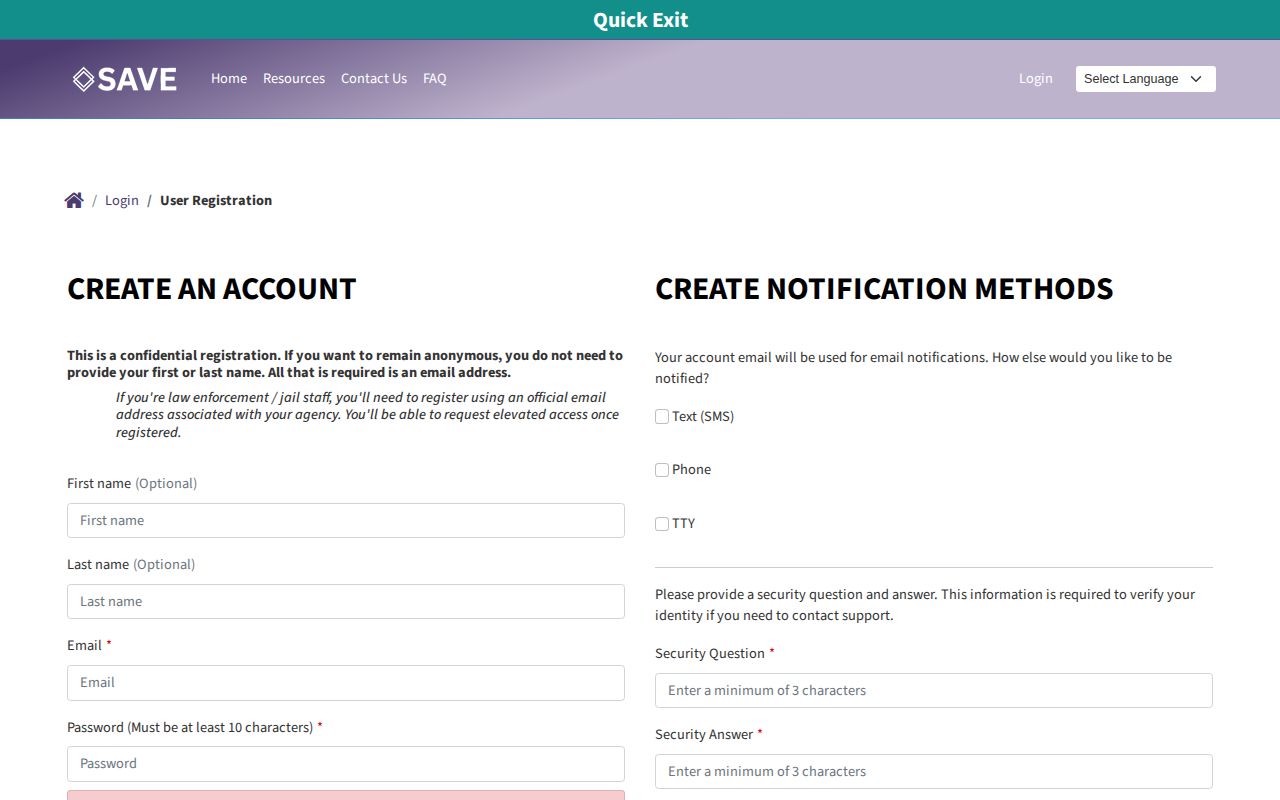
Check the live screen first because registration availability can change after the research date.
Confirm Pershing S.A.V.E. Release Results
Notification is not certification. For a Pershing County Jail event, ask the Sheriff for the release date, release disposition, and receiving agency when a transfer is possible. For Lovelock Correctional Center or another state prison, use the NDOC Offender Search, the Release data, and the agency record. A court order may authorize release before jail staff finish processing.
S.A.V.E. is not the federal BOP locator. A federal sentence requires the BOP system, while an ICE transfer uses the federal immigration locator. A U.S. Marshals movement may require the federal docket and agency contact. The Pershing County release verification paths separate these channels by custody type.
Retired VINELink PIN Instructions
Current S.A.V.E. instructions do not document a four-digit PIN. PIN advice belongs only to the retired VINE system. Under VINE, a phone registrant selected a four-digit PIN and entered it with the pound key to acknowledge a call and stop retries. Email registration did not require that PIN.
Most old registrations were migrated, but users of the VINE app were instructed to register again in S.A.V.E. This history explains why older pages mention a PIN. It should never be presented as a current Nevada account step.
Separate Nevada Release Notices
S.A.V.E. supplements rather than replaces NDOC’s separate mailed victim-notification registration. The NDOC notification route requires a written registration and current address. A request identifies the offender’s full name and NDOC ID, plus requester contact information and other requested details.
NDOC Victim Services accepts email at NDOCVictimServices@doc.nv.gov and mail at 5500 Snyder Avenue, Carson City, NV 89701. The Parole Board route uses ParoleBoardVictimServices@parole.nv.gov and 1677 Old Hot Springs Road, Suite A, Carson City, NV 89706. These statutory notice channels are not public certificates of discharge.
Pershing Release Alerts and Registry
The Nevada Sex Offender Registry is a separate conviction and registration system. It is not a universal released-inmate list. Public coverage depends on statutory tier and case facts, and the registry warns that data can change or lag.
A registry result should be confirmed with originating law enforcement or the court. Fingerprint comparison is required for positive identification. Its community notification tools do not replace a S.A.V.E. custody alert, a Sheriff release record, or an NDOC actual-release row.
Pershing Release Alert Confirmation Paths
The Pershing County Sheriff’s Office and NDOC hold different records. For a person booked at Pershing County Jail, ask for the jail movement or release log, release date, release disposition, and destination or receiving agency. A transfer can end county custody while leaving the person confined elsewhere. The court file may show the order that caused the movement, but it may not show the exact time jail staff finished processing.
For a person at Lovelock Correctional Center, NDOC is the records custodian even though the prison sits in Pershing County. Search by Offender ID, review the institution or status field, then examine Release data for `release_date` and `release_desc`. If parole is involved, compare the Board action and effective date, NPP placement approval, NDOC actual-release row, and NPP supervision. A grant alone is not proof of physical release.
A supervised person may still appear in S.A.V.E. after leaving confinement. That is useful, but “released” should not be stretched to mean free from all legal control. Parole and probation can impose active reporting duties. Residential confinement can place someone outside an institution while custody or supervision continues. Read the displayed status literally and ask the source agency what record can confirm it.
If several results share a name, preserve the identifiers before calling. Useful details include the displayed ID, source agency, current status, and any facility or supervision label. Do not add guessed birth dates or assume a photo proves identity. The same person can also have more than one custody episode. A notification request follows the offender in S.A.V.E., so a later alert may concern a return to custody rather than the original Pershing event.
Support can help with the portal, but it cannot turn the display into a certified Sheriff, court, or NDOC record. For a formal need, request the underlying record from its custodian. Nevada public access rules can allow records while still protecting victim data, personal identifiers, medical material, security information, sealed cases, and privileged supervision details.